Easy Crochet Bunny Baby Shoes: Free Pattern Tutorial
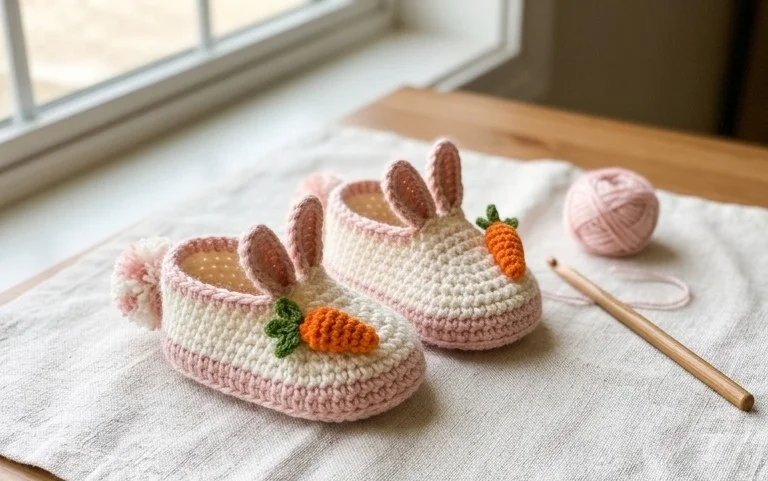
Soft yarn, rounded toes, and little bunny ears give these crochet baby shoes a sweet handmade look. They feel gentle against tiny feet and make a thoughtful baby-shower or newborn gift, especially when you choose a color that suits the family. The pattern is approachable for beginners who are comfortable holding a hook and counting stitches, while the shaping keeps the project interesting for more experienced makers. You’ll work basic crochet stitches to form the soles and uppers, then add the bunny details to finish each shoe. Small pieces are satisfying to make because you can see the shape take form quickly, and a pair uses only a modest amount of yarn. Along the way, you’ll learn how stitch increases help create a rounded shoe and how to keep both sides even. Make them slowly, checking the fit as you go, and you’ll have a soft keepsake ready for a little one.
Why You’ll Love This Pattern
A firm cotton fabric and simple single crochet make this dishcloth useful for everyday washing and wiping. The flat shape is easy to keep track of, and each row uses the same stitch, so you can settle into a steady rhythm without learning shaping. One cloth takes about 90 yards of yarn, making it a good choice for a partial skein. The finished 7.5-inch square is also a practical handmade gift that can be folded and tied with kitchen twine.
The rows were easy to count, and the cotton made a cloth that feels sturdy without being stiff. I finished mine in an afternoon.
— Mara, sample maker review
Pattern Overview & Skill Level
- Skill Level: Beginner. You need to chain, single crochet, turn, and keep a consistent stitch count.
- Approximate Time: 2–3 hours, depending on your pace and how often you pause to count.
- Construction: A flat square worked in rows from the bottom edge upward. There is no seam, border, or joining.
- Finished Dimensions & Sizing: About 7.5 × 7.5 inches (19 × 19 cm) after washing and drying flat. The pattern gauge is 4 single crochet stitches and 4 rows per inch.
Gauge affects the finished size and how dense the cloth feels. Make a small swatch in single crochet if you want to check your tension: at the stated gauge, a 4-inch square should measure about 16 stitches across and 16 rows high.
Materials & Supplies Needed
- Yarn: About 90 yards of worsted-weight (#4) 100% cotton yarn in one color. Cotton holds up well to repeated washing and makes a useful, absorbent cloth.
- Hook Size: 5.0 mm / H-8 crochet hook. If your fabric feels loose and floppy, try a 4.5 mm hook; if it feels stiff, try a 5.5 mm hook and check the dimensions again.
- Notions: Tapestry needle for weaving in the two yarn ends, scissors, and a ruler or tape measure for checking gauge.
- Substitutions: A cotton-linen blend is a suitable alternative and may feel slightly less soft. Choose a yarn with a similar worsted weight and follow the yarn label’s care instructions. Acrylic can be used for a cleaning cloth, but it may be less absorbent and may not tolerate hot washing. Changing yarn weight or hook size can change the cloth’s size and texture.
Stitch Guide & Abbreviations (US Terms)
- ch: Chain.
- sc: Single crochet. Insert the hook into the indicated stitch, yarn over and pull up a loop, yarn over again and pull through both loops.
- st: Stitch.
- sts: Stitches.
The turning chain does not count as a stitch in this pattern. Work the first single crochet of each new row into the first stitch, directly below the chain. This keeps the side edges straight and maintains 30 stitches across.
Step-by-Step Pattern Instructions
Use the hook and yarn listed above. The stitch count at the end of each row is the number of single crochets to have across that row. Do not include the turning chain in the count.
Dishcloth
- Row 1: Ch 31. Sc in the second ch from the hook and in each remaining ch across. Turn. (30 sts)
- Row 2: Ch 1, sc in each st across. Turn. (30 sts)
- Rows 3–30: Repeat Row 2, working 30 sc in every row and turning at the end. (30 sts per row)
Finishing
After Row 30, cut the yarn, leaving a tail of about 6 inches. Pull the tail through the last loop to secure it. Thread the tail onto a tapestry needle and weave it through several stitches on the wrong side, changing direction once so it is less likely to work loose. Weave in the starting tail in the same way. Do not pull the edges tight while sewing in the ends, since that can draw the square out of shape.
Lay the cloth flat and measure it. If your stitch tension matches the pattern gauge, it should be close to 7.5 inches square. A small difference is normal; washing and drying can also change the final measurement slightly. There is no border to add, so the cloth is ready to wash before its first use.
Care & Washing Instructions
- Wash cotton in a machine or by hand in warm water, up to 40°C (104°F), with similar colors.
- Dry flat to help the square keep its shape; avoid stretching the damp fabric by hanging it from one edge.
- While damp, gently reshape the corners and sides, then leave the cloth flat until dry.
Pro Tips & Common Mistakes to Avoid
- Keep your tension even, especially along the foundation chain. If that edge is much tighter than the other side, make the starting chain with a slightly looser hand or use a larger hook just for the chain.
- Count all 30 stitches at the end of each row. It is easy to miss the last stitch at the edge; checking before you turn helps prevent the cloth from narrowing.
- Weave in the yarn ends with a tapestry needle on the wrong side, passing through several stitches and changing direction. Trim the tail only after it is secure.
- To make the cloth larger, add stitches to the starting chain and work more rows to match the new width. Each extra stitch and row uses more yarn; a smaller cloth uses less, but a very small cloth may be less useful for washing dishes.
Frequently Asked Questions
Can I use a different yarn for this dishcloth?
Yes. Cotton is recommended because it is absorbent and can be washed often. A cotton-linen blend also works, though it may feel firmer. Check the yarn label for care guidance, and expect a different fabric or finished size if the yarn weight changes.
How can I make the dishcloth larger or smaller?
For a wider cloth, add chains to the foundation chain, keeping one extra chain for turning. Work the same number of single crochet stitches as the number of chains minus one. For more or fewer rows, repeat or stop after Row 2 as needed. The result will use more or less yarn and may not be square unless the row count matches the new width.
Is this crochet dishcloth pattern suitable for a beginner?
Yes. The pattern uses chains and single crochet worked in straight rows, with no increases, decreases, or sewing seams. If you are new to crochet, count each row before turning so you can spot a missed edge stitch right away.
Can I sell dishcloths made from this pattern?
Check the designer’s terms before selling finished items, and follow any instructions about credit or pattern use. This guide does not grant permission to reproduce or sell the written pattern itself.
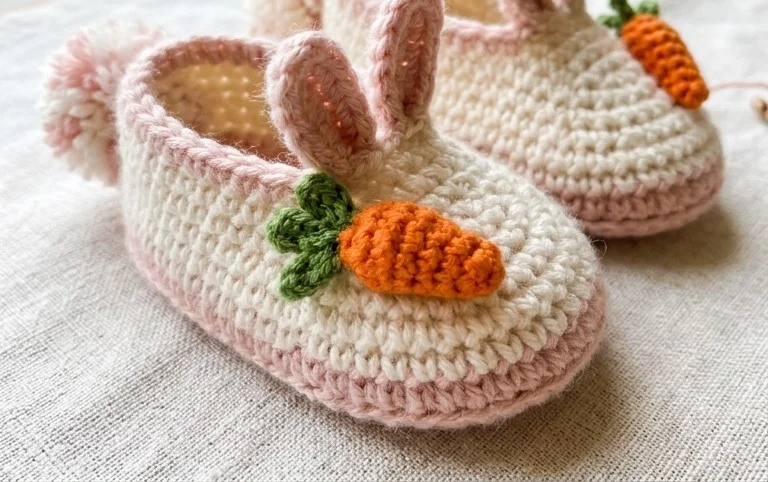
A finished pair of bunny shoes has a lovely mix of soft texture and playful detail, and the matching ears make each tiny shoe feel special. For a simple variation, crochet the pair in pale blue or another soft shade instead of the classic cream or pink. Before gifting them, check that the yarn feels gentle and that the shoes sit comfortably without tight edges. If you make a pair, share a photo on Pinterest or your favorite social media page so other makers can see your color choice and finished details. You can also explore more free crochet patterns on the blog for small gifts, baby accessories, and relaxing projects to work on with leftover yarn.