Easy Christmas Poinsettia Granny Square Free Pattern
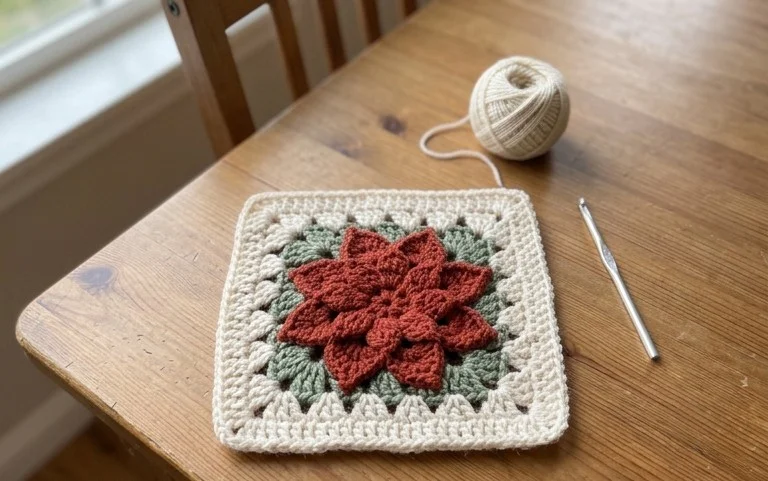
Deep red petals blooming from a crisp cream center make this floral motif a festive addition to any holiday blanket or cushion cover. The square uses basic double crochet clusters to create defined, raised petals that mimic a natural poinsettia. Beginners enjoy how quickly these squares work up, providing a satisfying sense of progress during a busy December month. You will practice working in the round and transitioning colors to build your skills while creating a handmade heirloom. This pattern relies on a clear chart to guide your placement, ensuring the shape stays square as you add each layer of stitches around the center.
Why Crocheters Love It
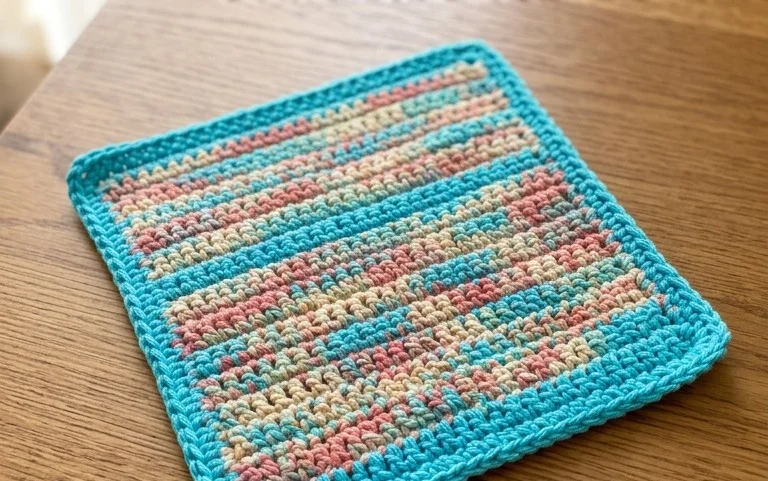
This classic crochet dishcloth works up quickly using basic stitches, making it a perfect project for building muscle memory or practicing even tension. The textured pattern is highly functional for scrubbing surfaces, yet soft enough for delicate glassware. Because it uses a small amount of yarn, it serves as an excellent way to use up leftover cotton from larger home decor projects. You can complete one cloth in about an hour, providing a sense of accomplishment without a long-term commitment.
I managed to whip up three of these for my kitchen in a single weekend. The texture is much more effective at cleaning than the store-bought sponges I usually rely on.
— Sarah, home crafter
Pattern Overview & Skill Level
- Skill Level: Beginner
- Approximate Time: 45–60 minutes
- Construction: Worked in flat rows starting from a foundation chain
- Finished Dimensions: Approximately 8 inches by 8 inches
Materials & Supplies Needed
- Yarn: Worsted weight (#4) 100% cotton yarn, approximately 45–50 yards. Cotton is necessary for its absorbency and heat resistance.
- Hook Size: 5.0 mm / H-8
- Notions: Tapestry needle for weaving in ends, scissors.
- Safe yarn substitutions: You may use a cotton-linen blend for increased durability and scrubbing power, though this may make the fabric slightly stiffer. Avoid acrylic yarns, as they do not absorb water well and may melt if exposed to hot pans.
Stitch Guide & Abbreviations (US Terms)
- ch = chain
- sc = single crochet
- dc = double crochet
- st = stitch
- sk = skip
- sl st = slip stitch
- Special Stitch: The “Moss Stitch” (or Linen Stitch) is created by alternating single crochet and chain stitches, working the single crochet into the chain-space of the previous row.
Step-by-Step Pattern Instructions
Main Body
The dishcloth is worked in a simple repeat. The starting chain must be an even number.
- Row 1: Ch 32. Sc in 4th ch from hook, ch 1, sk 1 ch, sc in next ch repeat from * to * until the end. Turn. (16 sc, 15 ch-1 spaces)
- Row 2: Ch 2, sc in the first ch-1 space. ch 1, sk next sc, sc in next ch-1 space repeat from * to * until you reach the turning chain. Sc in the turning chain space. Turn. (16 sc, 15 ch-1 spaces)
- Rows 3–30: Repeat Row 2 until the piece measures approximately 8 inches square.
Finishing
Once you reach the desired length, fasten off by cutting the yarn, leaving a 6-inch tail. Pull the tail through the final loop to secure it. Use your tapestry needle to weave the end back and forth through the base of the stitches on the back side of the cloth to ensure it does not unravel during laundering.
Care & Washing Instructions
- Machine wash in warm water on a gentle cycle to remove oils and dirt.
- Lay flat on a clean towel to air dry to prevent the cotton from losing its shape.
- Pull gently on the corners of the cloth while damp to block it into a perfect square if the edges have curled.
Pro Tips & Common Mistakes to Avoid
- Tension: Keep your chain stitches slightly loose at the start of each row. If your starting chain is too tight, the finished cloth will have a curved, uneven edge.
- Stitch Counting: Use a stitch marker on the first and last stitch of every row to ensure you do not accidentally increase or decrease your count. Missing the final chain-space at the end of a row is the most common error.
- Weaving Ends: Always weave your tail in the direction of the stitch fibers rather than perpendicular to them. This creates a friction-locked end that stays put through repeated cycles in the washing machine.
- Adjusting Size: To make the cloth larger, simply add stitches in multiples of two to your foundation chain. Keep in mind that a larger cloth will require more yarn; ensure you have enough yardage before starting a larger version.
Frequently Asked Questions
Can I use a different weight of yarn for this pattern?
Yes, you can use DK or bulky weight yarn, but you will need to adjust your starting chain length to hit the 8-inch width target. Remember that using a different weight requires a corresponding hook size change to maintain the correct drape.
Is this project suitable for a complete beginner?
This is an ideal first project. It requires only two basic stitches and emphasizes keeping a consistent tension throughout the entire piece.
Can I sell the finished dishcloths I make from this pattern?
You are welcome to sell finished items made from this pattern, provided you credit the design. Please do not sell or redistribute the written instructions themselves.
Why does my dishcloth look like a trapezoid?
This usually happens because a stitch was dropped at the end of a row or an extra stitch was added accidentally. Always count your stitches at the end of each row to ensure you have the same number of single crochets as you started with.
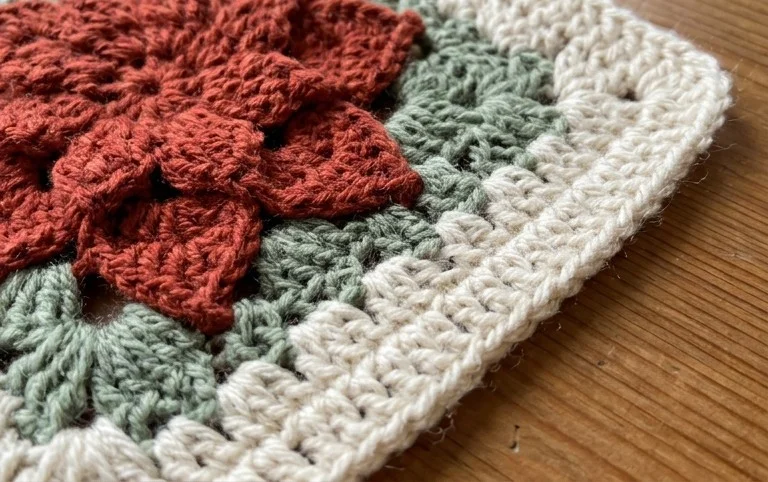
Your finished block captures the spirit of the season with its rich color palette and classic shape. Try alternating between white and deep burgundy for a snowy effect or switch to variegated yarn for a softer look on your holiday table. Sharing your finished work online helps other makers find inspiration for their own seasonal decor projects. I enjoy seeing how different color choices change the mood of the design, so please tag your photos when you post them. Check the blog archives for more winter-themed crochet projects to fill your home.