Textured Pink Gloves: Easy Free Crochet Patterns Guide
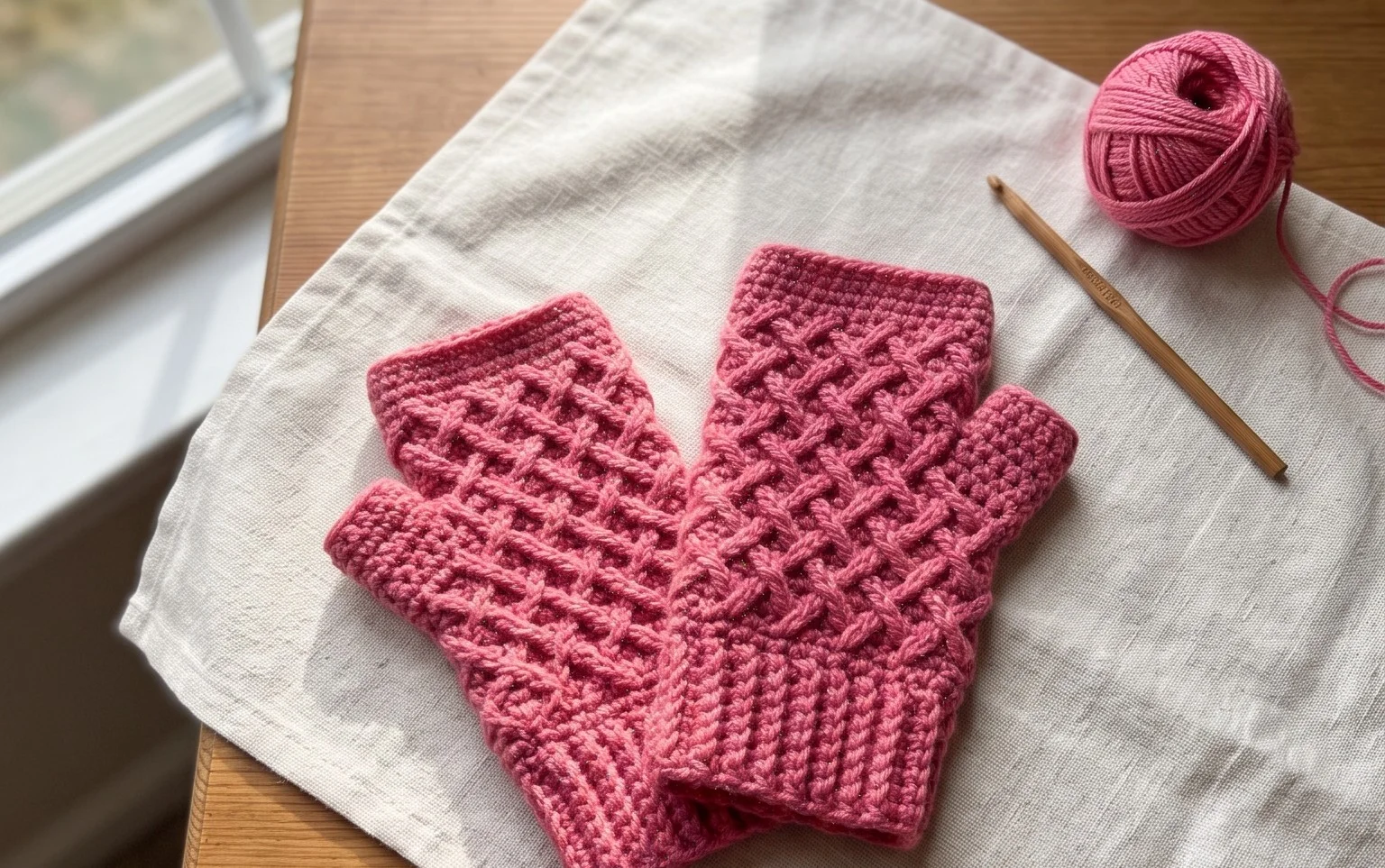
Soft pink yarn and raised stitches give these crochet gloves a cozy feel, with enough texture to make a simple accessory interesting to wear and fun to make. The finished pair adds a gentle pop of color on chilly walks, and the snug cuffs help keep wrists covered. Beginners can practice keeping their stitches even, while gift makers can choose a shade that suits someone’s winter wardrobe. Makers who love coordinating handmade pieces with soft home décor colors may enjoy that same blush palette in an everyday accessory. You’ll learn how textured stitches create a warm, tactile fabric and how to shape the gloves for a comfortable fit. The repeated work makes this a satisfying project to pick up for a quiet evening, and a finished pair is small enough to wrap as a thoughtful handmade gift.
Why You’ll Love This Pattern
A firm cotton dishcloth with straight edges is useful at the sink, and this simple version is made in single crochet rows. The rectangle has no shaping, so you can focus on keeping an even edge and counting stitches. A single skein usually provides enough yarn, and the repeated rows make it easy to pick up after a break.
Make one for everyday kitchen use or pair a few with a bar of soap as a practical handmade gift. Cotton absorbs water, holds up to frequent washing, and gives the finished cloth a sturdy texture. A 5.0 mm hook creates a close fabric that is useful for wiping counters and washing dishes.
The rows were easy to follow, and I had a useful cloth finished in one evening. I added a marker to the first stitch of each row to keep the edges straight.
— Maya, sample crocheter
Pattern Overview & Skill Level
- Skill Level: Beginner. You need to make a chain and single crochet in rows.
- Approximate Time: 2 to 3 hours, depending on your pace and tension.
- Construction: Crochet a flat rectangle in back-and-forth rows, then fasten off and weave in the ends. There are no seams or separate pieces.
- Finished Dimensions & Sizing: About 8 × 8 inches (20 × 20 cm) after washing and drying flat, using the gauge listed below.
Materials & Supplies Needed
- Yarn: About 90 to 110 yd (82 to 101 m) of worsted-weight cotton yarn, category #4. One solid color is enough; choose a smooth, washable cotton that can handle frequent use.
- Hook Size: 5.0 mm / H-8. Use the hook that gives you the stated gauge, as individual tension varies.
- Notions: Tapestry needle for weaving in ends, scissors, and a ruler or tape measure. A stitch marker can help identify the first stitch in each row.
- Gauge: 15 single crochet stitches and 16 rows measure 4 inches (10 cm) after washing and drying flat. Matching gauge gives a cloth close to 8 × 8 inches.
- Substitutions: A different brand of worsted cotton is suitable if it has a similar thickness. Cotton-linen blends can feel slightly drapier, while acrylic is less absorbent and may have a softer, stretchier texture. A thicker yarn or larger hook makes a larger, looser cloth and uses more yarn; a thinner yarn or smaller hook makes a smaller, denser cloth.
Stitch Guide & Abbreviations (US Terms)
- ch: Chain.
- sc: Single crochet. Insert the hook in the indicated stitch, yarn over and pull up a loop, yarn over again and pull through both loops on the hook.
- st / sts: Stitch / stitches.
- turn: Rotate the work to begin crocheting back across the row.
- Fasten off: Cut the yarn, leaving a tail, and pull the tail through the final loop to secure it.
The turning chain does not count as a stitch in this pattern. Work the first single crochet into the first stitch of each row, not into the turning chain.
Step-by-Step Pattern Instructions
Dishcloth
- Row 1: Ch 31. Sc in the second ch from the hook and in each ch across. Turn. (30 sts)
- Row 2: Ch 1. Sc in each st across. Turn. (30 sts)
- Rows 3–31: Repeat Row 2. Each row has 30 sc. At the end of Row 31, do not turn. (30 sts)
Check the cloth’s dimensions before fastening off. With the stated gauge, it should measure close to 8 inches wide and 7¾ inches tall. Small differences are normal; the cloth can be a little larger or smaller if your personal tension differs.
Finishing
- Fasten off, leaving a tail of about 6 inches (15 cm).
- Thread the tail onto a tapestry needle. Weave it through the backs of several stitches, change direction, and weave through a few more stitches so it is secure without making a thick knot.
- Weave in the starting tail in the same way. Wash the cloth according to the yarn label, then dry it flat and smooth the edges into shape.
Care & Washing Instructions
- Wash cotton in cool or warm water, up to 40°C (104°F), with similar colors; follow the yarn label if it gives different instructions.
- Dry flat for the neatest shape, or use a dryer only if the yarn label permits it.
- While damp, smooth the cloth’s edges and corners by hand; pin it to a blocking mat only if it needs more shaping.
Pro Tips & Common Mistakes to Avoid
- Keep the edges even: Make the turning chain loosely, then work the first sc into the first actual stitch. Accidentally skipping that stitch can reduce the row count and make the cloth taper.
- Count each row: Check for 30 stitches before turning. Place a marker in the first stitch if it is hard to see, especially at the beginning of the row.
- Use a tidy finish: Weave each end through the backs of stitches and change direction once. Avoid pulling the tail tight, which can pucker the fabric.
- Adjust size with care: Add or remove starting chains to change the width, then work more or fewer rows to change the height. Each extra chain adds one stitch to the width, and a larger cloth takes more yarn.
Frequently Asked Questions
Can I use a different yarn fiber?
Yes, but cotton is a good choice because it absorbs water and tolerates regular washing. A cotton-linen blend can work with a similar yarn thickness. Acrylic is less absorbent, so the cloth may be better for wiping dry surfaces than washing dishes.
How can I make the dishcloth larger or smaller?
Change the starting chain to adjust the width, keeping an even number of stitches if you want simple counting. Add or remove rows to adjust the height. The finished size and yarn use will change, so measure as you work.
Is this pattern suitable for a first crochet project?
Yes. It uses only chains and single crochet, with no shaping or joining. The main challenge is keeping 30 stitches in every row, so count before turning until the edges become easy to recognize.
Can I sell dishcloths made from this pattern?
You can usually sell handmade items you make, but check the designer’s terms if you are following a published pattern. Do not claim the pattern itself as your own, and follow any rules about credit or commercial use.
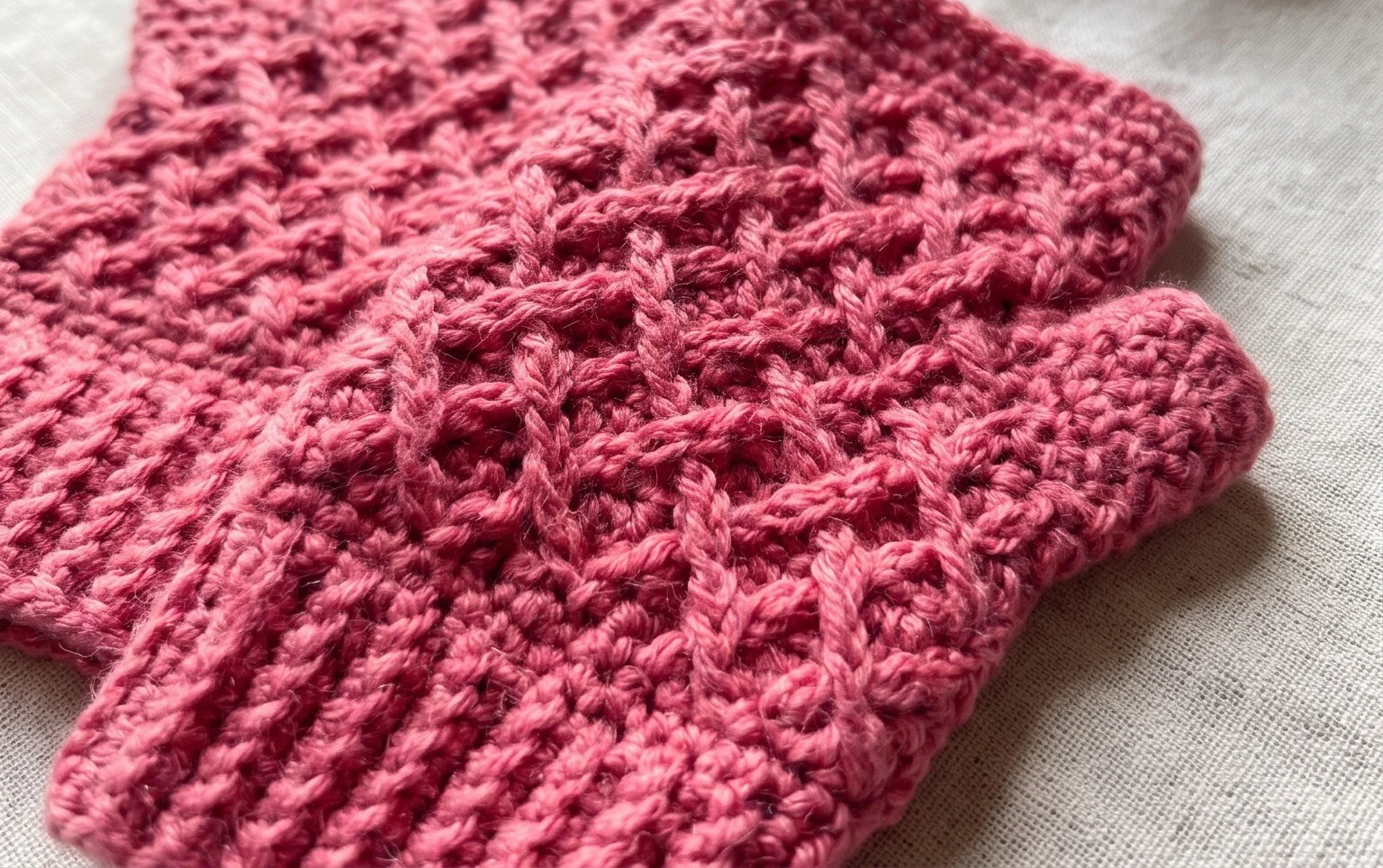
A finished pair of textured pink gloves brings a cheerful color and a soft, raised feel to cold-weather outfits, and you can enjoy the satisfaction of making something useful stitch by stitch. For a simple variation, choose a deeper rose or dusty mauve yarn, or adjust the length of the cuffs to suit the wearer. Check the fit as you work so the gloves sit comfortably without pulling across the fingers or wrist. When your pair is ready, share a photo on Pinterest or your favorite social media platform; seeing the yarn and stitch texture in your own hands can help another crocheter choose a project. Browse the blog for more free crochet patterns, from cozy accessories to practical handmade gifts.