Easy Winter Potholders: Free Crochet Pattern Ideas
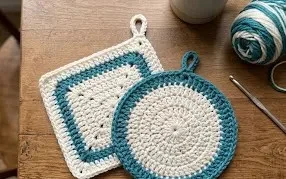
Thick cotton stitches make a winter potholder feel sturdy in the hand and useful beside a hot baking dish. These cozy squares suit beginners who want practice with single crochet, as well as gift makers putting together a handmade kitchen set or anyone adding a seasonal touch to home decor. The simple back-and-forth rows are easy to count, and the finished fabric has a firm texture that works well for everyday kitchen jobs. You’ll find guidance on choosing cotton yarn, keeping the edges straight, checking gauge, and adding a border for a neat finish. A snowflake shade, deep red, or pine green can give the same basic square a winter look, while a hanging loop makes it easy to keep within reach. Make one for your own kitchen, or crochet a pair to tuck into a practical winter gift basket.
Why You’ll Love This Pattern
A firm cotton dishcloth is useful at the sink, and this simple square is made with single crochet rows that are easy to count. The 30-stitch width gives you a manageable practice piece without a long foundation chain, and the straight sides make it a good project for learning to keep row edges even.
One ball of worsted cotton is usually enough, so the cloth works well for using up a partial skein. Make a set in one color for everyday kitchen use, or choose a few coordinating shades for practical handmade gifts. The repeated rows are easy to pick up and put down between other tasks.
The rows were easy to follow, and the cotton makes a sturdy cloth that washes well. I added a marker to the first stitch of each row to keep the edges straight.
— Maya, home crocheter
Pattern Overview & Skill Level
- Skill Level: Beginner. You need to know how to chain and make a single crochet stitch.
- Approximate Time: 2–3 hours, depending on your pace and how often you pause to check the edges.
- Construction: A flat square worked back and forth in rows, with a simple single crochet border worked around the finished cloth.
- Finished Dimensions & Sizing: Approximately 8 × 8 inches (20 × 20 cm), including the border, when worked to gauge.
The cloth is worked in one piece. Its exact size depends on your yarn, hook, and tension, so check the gauge before beginning if you want a close match to the finished measurements.
Materials & Supplies Needed
- Yarn: About 85 yards (78 m) of worsted-weight cotton yarn, US #4, in one color. Choose 100% cotton for absorbency and heat tolerance around ordinary kitchen tasks.
- Hook Size: 5.0 mm / H-8 crochet hook.
- Notions: Tapestry needle for weaving in ends, scissors, and a removable stitch marker for marking the first stitch of each row.
- Gauge: 15 single crochet stitches and 16 rows measure 4 inches (10 cm) after a light wash and dry. Adjust your hook size if your swatch is wider or narrower.
- Substitutions: A similar-weight cotton-linen blend can be used, but it may make the fabric drapier. Avoid acrylic for a cloth that will be used near hot cookware. A different yarn weight changes the finished size and may change the yardage needed; make a gauge swatch before starting.
Stitch Guide & Abbreviations (US Terms)
- ch = chain.
- sc = single crochet: insert the hook in the indicated stitch, yarn over and pull up a loop, then yarn over and pull through both loops on the hook.
- sl st = slip stitch: insert the hook in the indicated stitch, yarn over and pull through the stitch and the loop on the hook.
- st(s) = stitch(es).
- rep = repeat.
The turning chain at the start of each row does not count as a stitch. Work the first single crochet into the first stitch of the row, not into the turning chain.
Step-by-Step Pattern Instructions
Dishcloth
Foundation: Ch 31.
Row 1: Sc in the second ch from the hook and in each ch across. Turn. (30 sts)
Rows 2–30: Ch 1, sc in each st across. Turn. (30 sts each row)
After Row 30, do not turn. The turning chain is not included in the stitch count. The main square should measure close to 7½ inches (19 cm) on each side before adding the border. If it is noticeably longer or shorter, check that you have 30 stitches per row and compare your gauge.
Border
Round 1: Ch 1, then work sc evenly around the square. Place 30 sc across the top edge, 30 sc across the bottom edge, and 30 sc along each side. In each corner, work 3 sc into the corner space to help the fabric lie flat. Join with a sl st to the first sc. (132 sts)
To make the side edges even, space the 30 sc along each side rather than forcing one stitch into every row edge. Keep the spacing consistent; crowded stitches can make the border ripple, while too few can pull the sides inward.
Finishing
Fasten off, leaving a tail long enough to weave in. Thread the tail onto a tapestry needle and weave it through the backs of several stitches, changing direction once so it stays secure. Weave in the starting tail the same way. Wash and dry the cloth before measuring its final size.
Care & Washing Instructions
- Wash cotton in warm water, up to 40°C (104°F), with similar colors and ordinary laundry detergent.
- Dry flat for the neatest square shape, or tumble-dry on low if the yarn label allows it.
- While damp, smooth the edges and reshape the corners by hand; follow the yarn label if you use a cotton blend.
Pro Tips & Common Mistakes to Avoid
- Keep your tension steady but not tight. If the fabric feels stiff or the hook is difficult to insert, try a 5.5 mm hook; if it feels loose and holey, try a 4.5 mm hook.
- Count all 30 stitches at the end of each row. Place a marker in the first stitch of the row if you tend to miss the last stitch at the opposite edge.
- Do not use the turning chain as the first stitch. Working into it by mistake can add stitches and make the sides slant outward.
- For a larger cloth, add chains to the foundation and work the same number of single crochet stitches across each row. Each extra foundation chain adds about ⅙ inch (4 mm) at the stated gauge and uses more yarn; add rows as well if you want to keep the square shape.
Frequently Asked Questions
Can I use a cotton blend instead of 100% cotton?
Yes. A cotton-linen blend is a suitable option, though the cloth may feel softer and drape more. Check the yarn label for washing instructions, and make a swatch because blends can change the gauge.
How can I make the dishcloth smaller or larger?
Change the foundation chain to adjust the width, then work fewer or more rows to match that width. Keep the same stitch count across every row. A larger cloth takes more yarn, and a smaller cloth takes less.
Is this pattern suitable for a first crochet project?
Yes, if you can make a chain and single crochet. Practice on a small swatch first, then count each row to keep the square edges straight. The border is optional if you would like to finish after the main piece.
May I sell dishcloths made from this pattern?
You may sell finished items if the designer’s terms allow it. Check the specific pattern’s usage terms, and write your own product description rather than presenting the pattern as your own.
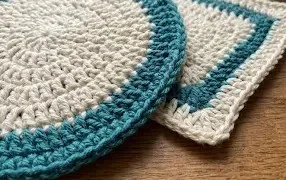
A finished winter potholder gives your kitchen a useful handmade touch, with firm cotton stitches ready to sit beside a warm pan or casserole dish. Keep the square simple, or change the look with a deep green or berry-colored yarn and a matching border. If you make one, share a photo on Pinterest or your favorite social media account so other crocheters can see your color choices and finished texture. You can also explore more free crochet patterns on the blog for useful home projects to make through the colder months. Check that your yarn is cotton and that the finished fabric is thick enough for the way you plan to use it.