Easy Wagon Wheel Crochet Flower: Free Pattern Guide
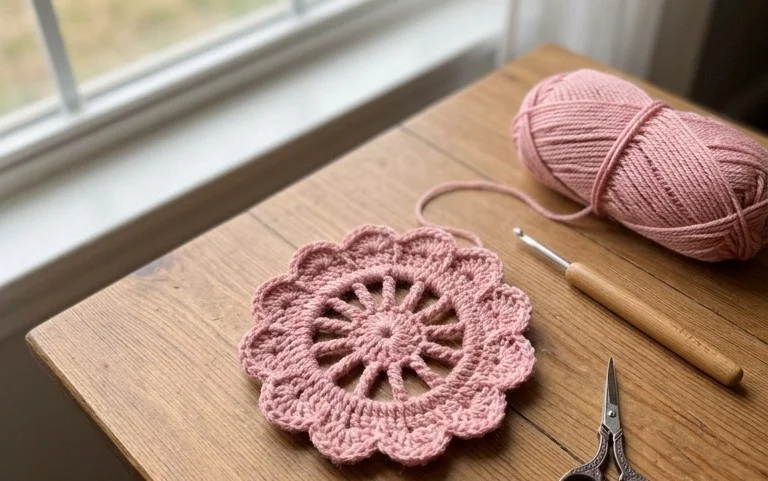
A wagon wheel crochet flower has a round center, spoke-like stitches, and petals that fan out around the edge. The finished motif feels light and textured, with a clear shape that stands out on a blanket, bag, or wall hanging. It suits beginners who are ready to work in rounds, as well as gift makers and home decor lovers looking for a small project with plenty of character. You’ll learn how the center and radiating chain spaces form the wheel, then work stitches into those spaces to shape the petals. The repeating structure is satisfying to watch grow, and a single flower is a manageable way to practice keeping your stitch count even. Make one in an afternoon, or crochet a handful in different colors for a coordinated set.
Why You’ll Love This Pattern
A firm cotton stitch gives this beginner-friendly crochet washcloth a lightly textured surface that works well for everyday washing and wiping. The pattern uses single crochet worked in straight rows, so you can focus on even tension instead of managing shaping or complicated repeats.
The 26-stitch width is easy to count, and the cloth takes about two hours to make once you are comfortable with single crochet. It is also a practical way to use a small amount of worsted cotton, though a single color makes it easier to spot missed stitches. The finished square can be used at the sink, packed with a handmade soap, or kept as a reusable cleaning cloth.
The rows were easy to follow, and I liked how the cotton made a sturdy cloth that still feels soft after washing.
— Jo, fictional sample review
Pattern Overview & Skill Level
- Skill Level: Beginner. You need to chain and work single crochet in rows.
- Approximate Time: About 1.5–2.5 hours, depending on your pace and whether you add a border.
- Construction: The washcloth is worked flat from the bottom edge upward in turned rows. No seaming is needed.
- Finished Dimensions & Sizing: About 7.5 × 7.5 in (19 × 19 cm) after washing and drying flat, using the gauge below. Small differences in tension will change the finished size.
- Gauge: 14 sc and 16 rows measure about 4 in (10 cm) in single crochet after washing and drying flat. Gauge matters for the stated dimensions, but does not have to match for a functional washcloth.
Materials & Supplies Needed
- Yarn: About 90 yd (82 m) of worsted-weight cotton yarn, category #4. Choose 100% cotton for good absorbency and easy laundering. One solid color is easiest for counting; variegated yarn also works.
- Hook Size: 5.0 mm / H-8 crochet hook. If your swatch is too loose, try a 4.5 mm hook; if it is too tight, try a 5.5 mm hook.
- Notions: Tapestry needle for weaving in the ends, scissors, and a ruler or measuring tape. A stitch marker is optional and can mark the first stitch of a row.
- Substitutions: A similar-weight cotton or cotton-linen blend is a suitable replacement. A blend may feel less absorbent or have a different drape. Avoid fuzzy or stretchy yarn for a cloth that needs to hold its shape. If you use a different yarn weight, the washcloth will change size and may need a different hook.
Stitch Guide & Abbreviations (US Terms)
- ch: Chain. Yarn over and pull through the loop on the hook.
- sc: Single crochet. Insert the hook in the stitch, yarn over and pull up a loop, then yarn over and pull through both loops on the hook.
- st / sts: Stitch / stitches.
- turn: Rotate the work to begin the next row.
The turning chain does not count as a stitch. Work the first single crochet of each new row into the first stitch, not into the turning chain. The pattern uses standard US crochet terms.
Step-by-Step Pattern Instructions
Washcloth
- Foundation: Ch 27. The first 26 chains form the 26 stitches for the first row.
- Row 1: Sc in the second ch from the hook and in each remaining ch across. (26 sts)
- Row 2: Ch 1, turn. Sc in each st across. (26 sts)
- Rows 3–30: Repeat Row 2. Each row has 26 sc. (26 sts per row)
Finishing
After Row 30, fasten off, leaving a tail about 6 in (15 cm) long. Thread the tail onto a tapestry needle and weave it through the stitches on the edge, changing direction once so it is secure. Weave in the starting tail the same way. Do not pull the ends so tightly that the edge puckers.
Wash and dry the cloth according to the yarn label, then lay it flat and smooth the edges into a square. If the cloth measures noticeably shorter than 7.5 in, you may have made fewer rows than intended or your row gauge may be tighter. The stitch count should remain 26 across each row.
Care & Washing Instructions
- For 100% cotton, machine wash with like colors in warm water, up to 40°C (104°F), unless the yarn label gives different instructions.
- Dry flat for the neatest shape, or tumble dry on low only if the yarn label permits it; high heat can shrink cotton.
- While damp, smooth the cloth flat and gently square the corners; use light blocking only if the edges need reshaping.
Pro Tips & Common Mistakes to Avoid
- Keep tension steady: Relax your grip on the foundation chain. A chain that is tighter than the rows can make the bottom edge pull inward. If this happens often, make the foundation chain with a hook one size larger, then switch to the pattern hook for Row 1.
- Count across each row: Check for 26 stitches before turning. The first and last stitches are easy to miss, especially when the turning chain is mistaken for a stitch.
- Secure ends neatly: Weave each tail through the back of several stitches, then change direction. A short, loose tail can work free after repeated washing.
- Adjust size with care: Add or remove foundation chains to change the width, then work the same number of rows for a square. For example, a 31-chain foundation gives 30 sc across. Adding stitches and rows increases yarn use, so have extra yarn available.
Frequently Asked Questions
Can I use acrylic yarn instead of cotton?
You can, but acrylic usually absorbs less water than cotton and may feel different against the skin. The finished size also depends on the yarn and hook. Make a small swatch first, and follow the care instructions for the yarn you choose.
How can I make the washcloth larger or smaller?
Change the number of chains while keeping the foundation 1 chain longer than the desired stitch count. For example, chain 23 for 22 sc across. Add or remove rows to adjust the height. A larger cloth uses more yarn and takes longer to dry.
Is this pattern suitable for a first crochet project?
Yes, if you can make a chain and single crochet. Check that each row has 26 stitches before moving on. If the edges look uneven, count the first and last stitches carefully and make sure the turning chain is not counted as a stitch.
May I sell washcloths made from this pattern?
Check the designer’s terms before selling finished items, and follow any conditions they set. If you sell the cloth, describe the yarn accurately and include care instructions that match its fiber content.
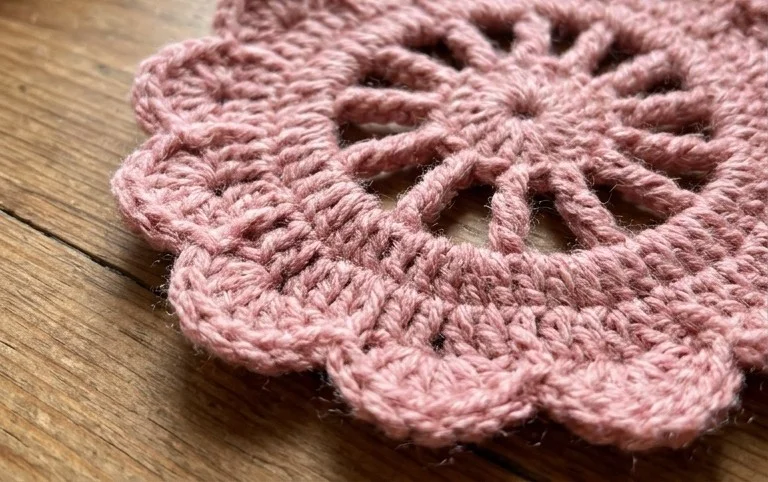
When the last petal is finished, you’ll have a dimensional flower with a distinct wheel-shaped center and a tidy edge. Try changing the yarn color between the center and petals to make the spokes stand out, or keep the whole motif in one shade for a softer look. If you make one, share a photo on Pinterest or your favorite social platform; seeing the colors and uses people choose is part of the fun. You can also browse the blog for more free crochet patterns, including small motifs and projects that use the same simple stitches. Keep your finished flower flat while you weave in the ends so its shape stays clear.